Takeaway Food Boxes
View →

A practical guide for Ghanaian food businesses choosing takeaway packaging alternatives around food type, heat, grease, transport, portion and service needs
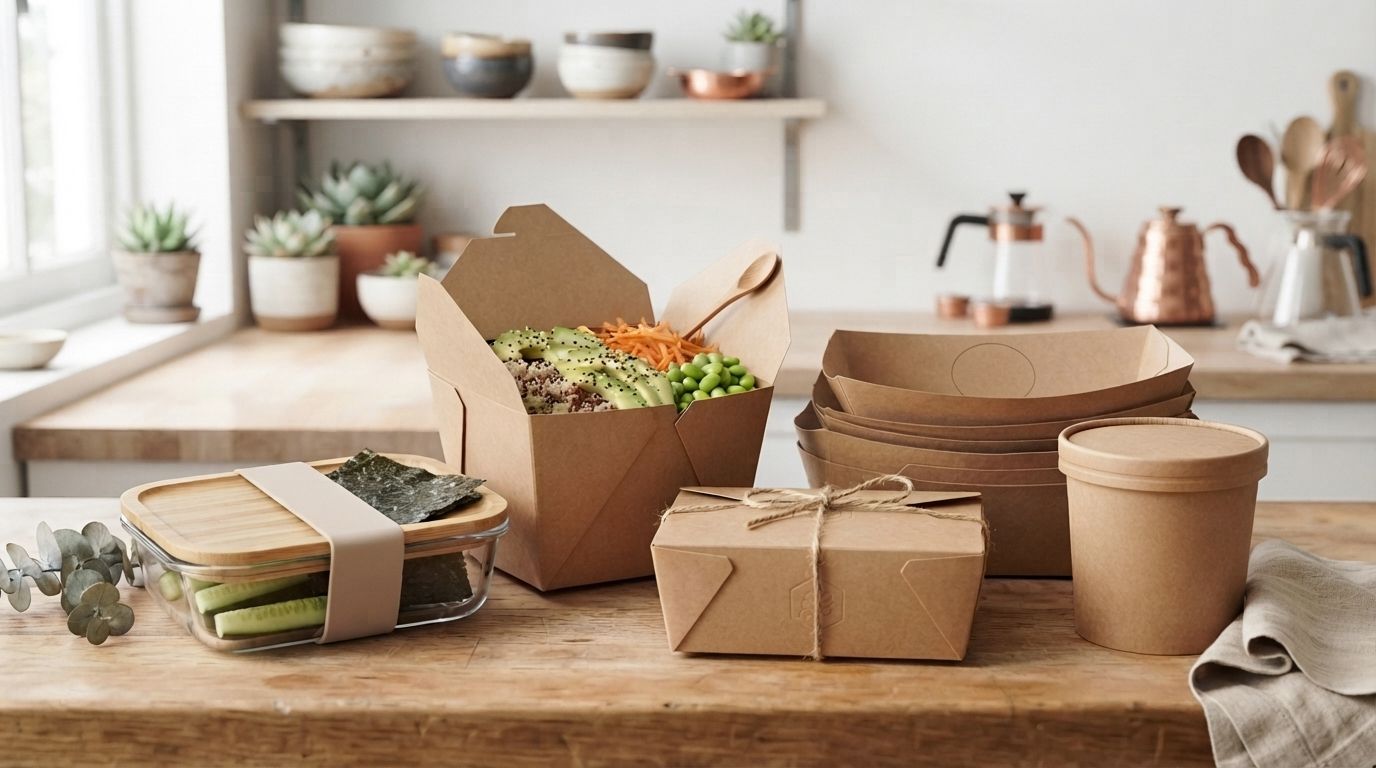
Replacing a takeaway container is not simply a matter of choosing a different material.
The replacement still needs to protect the food, fit the portion, handle the way it is served and work for the business.
PacLabs helps Ghanaian food businesses explore paper-first packaging alternatives around those practical requirements.
Explore Takeaway Packaging
Request a Quote
Before choosing a replacement, look at what the package actually needs to handle.
Consider:
A package that works for one food may not be the right choice for another.
Depending on the application, businesses can explore formats such as:
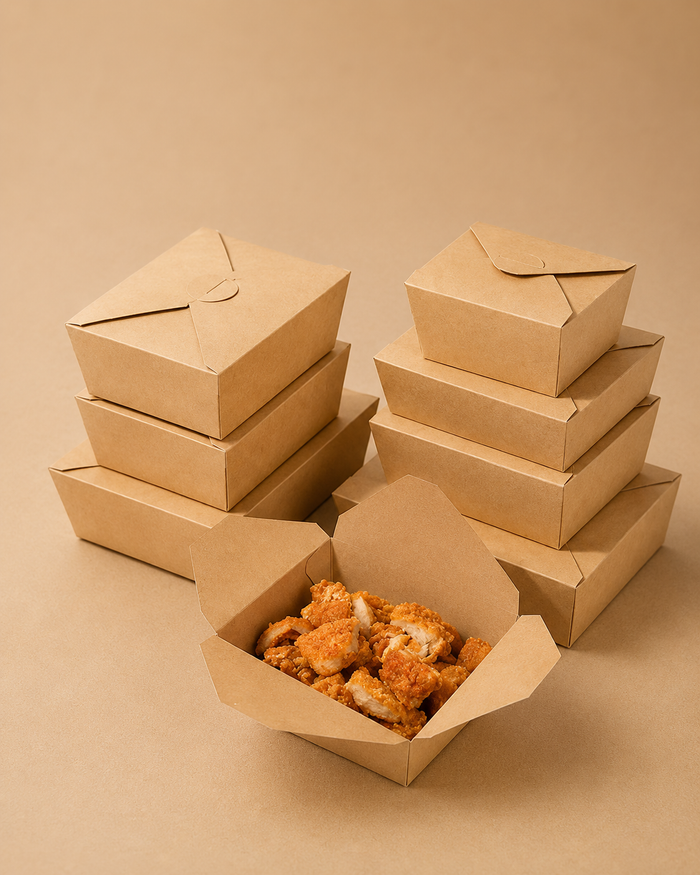
Useful for structured meals and combinations where containment and transport matter.
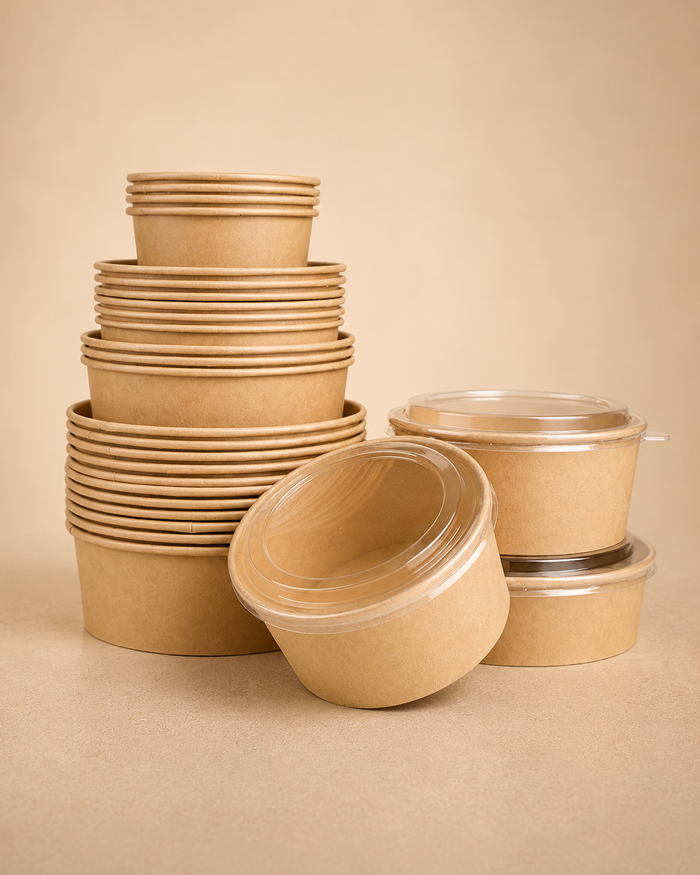
Useful for selected deeper meals and food applications where a bowl format makes more sense.
Suitable for open-format serving situations such as selected fried foods, snacks and event service.
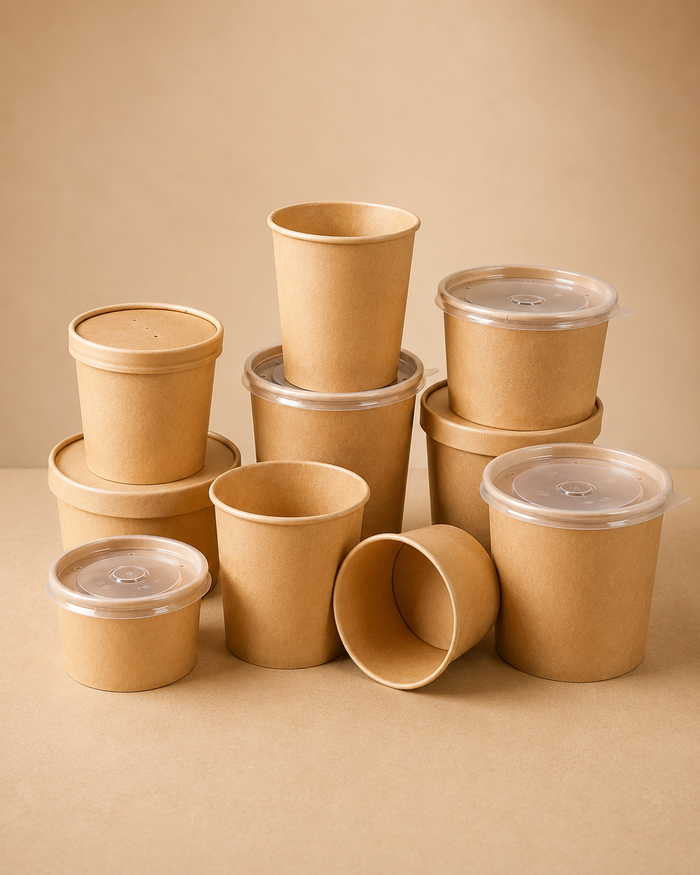
Useful for appropriate soups, sauces and portioned foods when the specific container and closure are suitable.
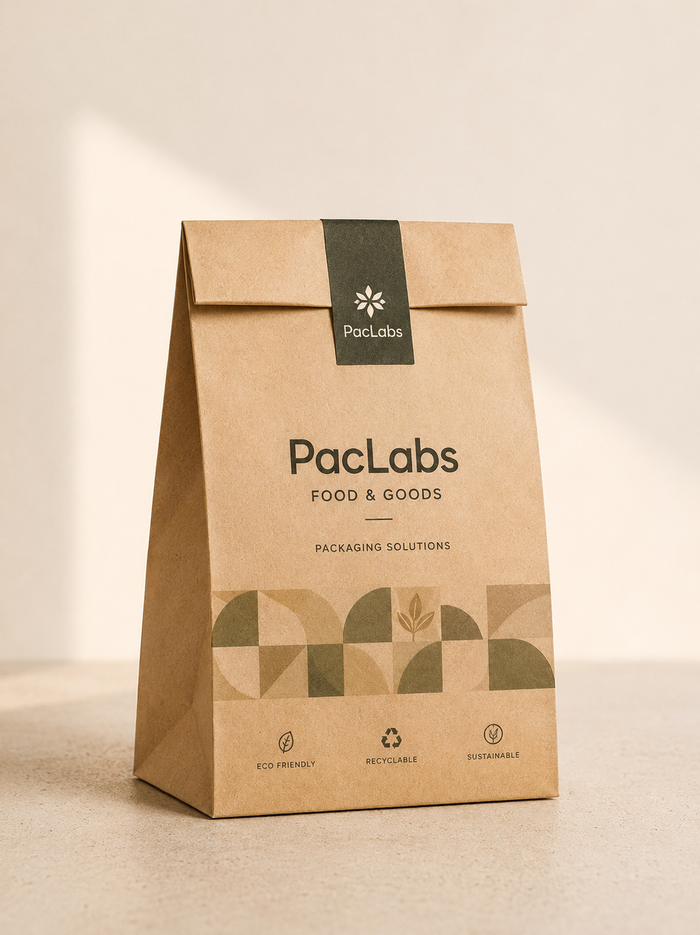
Useful for lighter takeaway applications such as selected snacks, bakery products and other foods suited to bags or wraps.
Look for a format that staff can pack consistently and customers can carry easily.
Consider movement, stacking, heat, moisture, grease and the time between packing and consumption.
Practicality and cost matter alongside food protection and ease of carrying.
Consistency, serving efficiency, presentation and volume become more important.
A common mistake is trying to find one container that can replace every old format.
Instead, build a small packaging system around the menu.
For example:
Rice meals → structured box or suitable bowl
Fried foods → suitable tray or bag
Soups → suitable deeper container with appropriate closure
Snacks → bag, tray or box depending on the service
The exact choice should follow the product specification and food application.
A replacement package should be considered as a complete system.
Ask:
Paper-first can be a useful direction, but the package still needs to perform properly.
Before changing a large packaging order, test the package with the actual food and service process.
Check it under realistic conditions:
A packaging decision becomes much clearer when tested in the real operating environment.
A packaging change affects purchasing, kitchen workflow, customer experience and cost.
Treat it as a packaging-system decision rather than a simple container swap.
PacLabs can help you compare suitable formats around what you serve and how you serve it.
Depending on the food and application, businesses can explore suitable paper and kraft boxes, bowls, trays, cups, bags and wraps.
No. The package still needs to perform properly for the food, portion, service and transport conditions.
Consider heat, moisture, grease, leakage, stacking, movement and the expected delivery time.
Yes. Share your food type, portion, service method and approximate quantity, and PacLabs can help identify relevant packaging formats.
The goal is not simply to remove one material.
The goal is to move toward packaging that works for the food, the business and the customer while making more responsible material choices where appropriate.
Practical points to apply before your next packaging decision.
Formats and solutions referenced in this guide.
Continue reading across materials, branding, and operations.
Share your product, volumes, and timeline, and we will recommend materials, formats, and print options that fit your operation.